

The Strategy Builder
for Legal professionals

Vidhan uses advanced math for legal reasoning
to uncover the most effective strategies and solutions.

Designed by
Princeton math Ph.D. IIT alumniGuided by
experienced lawyers and judges

  • No model training on your data
  • Cancel anytime
  • Lifetime 20% off
  • *

The lost argument

Find the strongest argument before the case hardens on a weaker one

Every senior lawyer has experienced the pain of discovering a stronger argument after pleadings were filed, when there is little you can do with it

The cost of missing an argument is highest before filing.

Unfortunately, that is also when partner attention is most fragmented across several matters. So only a few theories get explored when ten might exist.

Illustration of scattered pieces representing material still to be connected

Research consumes the time window

Counsel must still decide if the material supports a theory, what counters will be raised and where it falls short, instead of exploring all possible alternatives to find the strongest argument. The result is a weaker case.

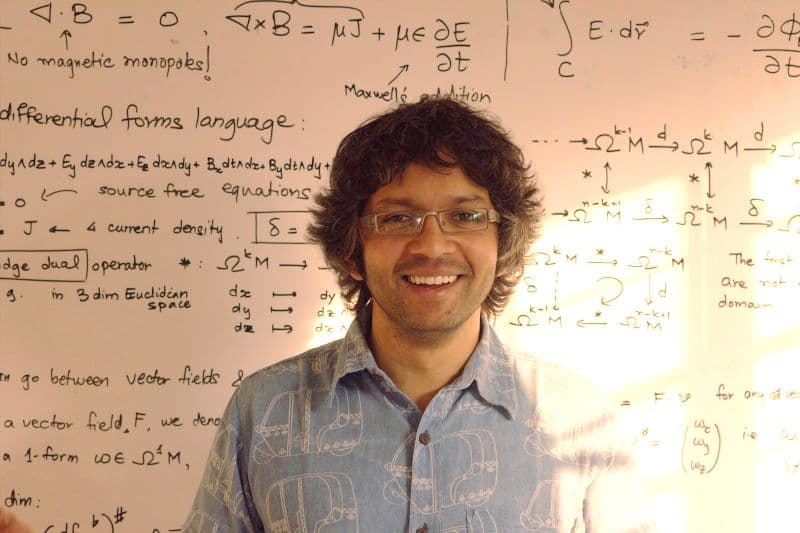
Illustration of connected pieces representing an argument structure

The AI crisis of confidence - confidently wrong?

Pure Generative AI can be confidently wrong especially in familiar looking yet genuinely new scenarios. So counsel must check the output's accuracy - a hard task if the reasoning process is not exposed.

The lost hours

Indian lawyers spend an estimated 10.5 crore hours every month— reading, instead of building arguments.

Our estimate is based on conversations with practising Indian lawyers, not a systematic time-use study.

Current legal AI seem useful. Summaries. Annotations. Drafts. But the law is still organized as tables and text—not as the relationships, constraints and implications you need to reason through a case. So the lawyer is still left to connect the dots before the next move becomes clear.

The interface changed. The process did not.

The inherited burden

This is not an unavoidable cost of legal work.

“When you raise the dead, they bring their baggage.”

— William Gibson, The Difference Engine

The law is organised for retrieval.

Databases inherited the library’s filing logic: year, court, citation, subject and keyword. They can find the pieces. They do not, by themselves, show how those pieces form an argument.

The digitized filing cabinet
Inside Vidhan Atlas™

A mathematical structure for the law

Built for strategic reasoning, not retrieval.

Other legal apps organise law for retrieval - a directory of locations and street names organized alphabetically. Vidhan organises law for reasoning - a city map of locations, streets, bridges, tunnels with speed limits, one-ways, roadblocks, busy intersections and so on. Which one would you need to drive to a new restaurant?

Powered by Vidhan Core our proprietary Reasoning Algorithms

Inside Reasoning Core

Legal reasoning using mathematical algorithms

Vidhan Atlas is the mathematical map of law (or more accurately a higher dimensional analog of it). The reasoning core are the math algorithms that explore that map - finding the "best" path to go from evidence to the desired conclusion.

How Reasoning Core works

A Conceptual workflow analogy.

  1. Build the map and locate the city

    Translate legal principles, statutes and case law into higher dimensional mathematical representations - 'The Map'. Do the same for the facts and evidence of the specific matter to demarcate the region and locations on the map that are relevant - 'The City'.

  2. Explore the city to see the options

    Apply mathematical reasoning to survey different paths (argument chains), road blocks (counters), restricted zones (jurisdiction, limitations, distinguishing precedents) as well as potholes, animal crossings, potential traffic jams (risks).

  3. Evaluate the options and plan your trip

    Inspect - assumptions, supporting authorities and so on. Score the different paths based on requirements - fastest, shortest, safest, least crowded - weighing each against roadblocks and risks of each.

Language models have two restricted roles: translating human languages into mathematical representations and orchestrating the mathematical algorithms.
The strategy is built by the mathematical Reasoning Core.

Vidhan exposes the premises, reasoning steps, supporting authorities, and conclusions so they can be inspected against current legal sources.

Capabilities

Available in early access

Argument Builder

Develop argument paths connecting facts, legal principles, and supporting authorities.

Available in early access

Opposition Simulator

Explore counterarguments and examine where an argument may fail.

Available in early access

Risk Mapper

Examine factual and legal vulnerabilities that could change your strategy.

Available in early access

Maneuvers

Consider next actions in the context of your argument and its risks.

Planned

Ratio Extractor

Planned: distinguish a judgment’s ratio from facts, obiter, and procedural detail.

Planned

Contra Bench Alerts

Planned: identify judgments that may conflict with the authorities supporting an argument.

The team

Mathematicians building for legal practice

Our founders bring mathematical research and systems engineering together, with legal advisers helping connect the work to practice. Their credentials explain how the reasoning architecture is built.

Portrait of Dr. Chaitanya Guttikar

Dr. Chaitanya Guttikar

Co-Founder (CEO)

Full-stack systems builder across automotive, media, medical imaging, and defence.

Math PhD, Princeton · IIT Bombay

Portrait of Dr. Girish Kulkarni

Dr. Girish Kulkarni

Co-Founder (CSO)

Mathematician, ML engineer, and entrepreneur.

Math PhD, IISER Pune · IIT Madras · Cambridge ELLIS · TIFR postdoc

Founder portrait

Founder

Math PhD, Princeton · IIT Bombay · INSA Young Scientist · Former Mathematics Department Chair, IISER Pune · Fellow of the Indian Academy of Sciences

See It in Action

The Beta is live — for early access testers.

We're testing the interface with a small cohort of corporate disputes counsel. Apply to join them and see Vidhan work on a real fact pattern.

Early Access Demo
Apply to unlock the Beta version and try Vidhan on your own matter.
Apply for Early Access

Before you apply

Have questions about how Vidhan works, or whether it's for you?
Here's what you should know.

Who is Vidhan for?

Vidhan is built for Indian corporate and commercial counsel exploring arguments and shaping legal strategy. It keeps professional judgment with the lawyer and makes the reasoning available for inspection.

How is the reasoning different from generative AI or RAG?

Vidhan Atlas represents legal principles and argument structures mathematically. Mathematical algorithms explore how those structures connect with the facts of a matter. Language models have two restricted roles: converting small, bounded pieces of language into mathematical representations and orchestrating Vidhan's mathematical algorithms. Retrieval supplies authorities; the strategy is built by the mathematical reasoning core.

Do you offer a zero-hallucination or 100% accuracy guarantee?

No. Vidhan's core reasoning uses mathematical algorithms. LLMs are restricted to converting small, bounded pieces of language into mathematical representations and orchestrating those algorithms; they are not asked to generate open-ended legal answers. This makes hallucinated outcomes highly unlikely, but “virtually zero” is not guaranteed zero. The practical issue is responsibility: Vidhan makes every material claim, source, and reasoning step easy to inspect, while the legal professional remains responsible for the work. See the Terms of Use.

What information should I include in my application?

Describe your practice and use case in general terms. Do not include client names, party details, privileged material, confidential facts, or documents. The application is not a place to submit a matter for analysis. Read the Privacy Policy before applying; questions about data handling can be sent to privacy@vidhan.ai.

Which areas of law does Vidhan cover?

The current focus is Indian corporate and commercial law. The coverage page lists the available legislation and the current boundaries for judgments and practice areas. Tell us your area of work in general terms so we can assess fit.

What does early access include, and what is expected of me?

Early access provides full use of capabilities currently available during MVP testing, until testing ends or the agreed usage limit is reached, whichever comes first. Usage limits are communicated during onboarding, before you begin. There is no long-term commitment.

We ask you to be available for a 30-minute onboarding call within two weeks of being accepted, try the available capabilities, and share candid feedback. Your experience helps inform what we build next. We review each application for fit.

What happens after I apply?

We review your application for fit and contact you about next steps. If you have a question before applying, contact founders@vidhan.ai.

Questions before applying? Contact the founders.

For founding users

Set new precedents
Vidhan Strategy Builder

“I would rather create a precedent than find one.” — William O. Douglas, former U.S. Supreme Court Justice.

  • No model training on your data
  • Cancel anytime
  • Lifetime 20% off
  • *